
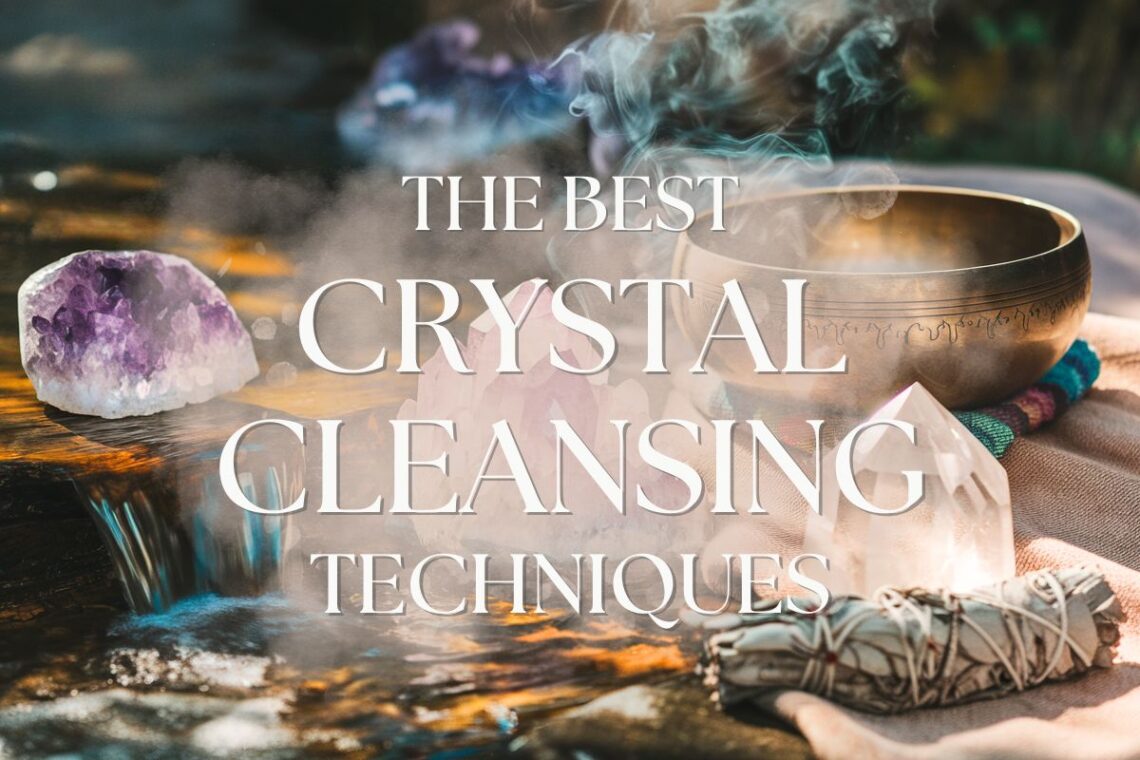
Cleansing and energizing your healing crystals is a common practice in crystal healing, often believed to refresh the stone’s natural properties and remove any absorbed energies or impurities. While traditional crystal cleansing relies on intuitive and spiritual methods—such as sunlight, moonlight, or water—scientific insights can deepen our understanding and add another layer to crystal care. This guide combines both approaches, offering practical tips supported by research for safe, effective crystal cleansing handling and purification.
The Importance of Cleansing & Energizing Crystals
Healing crystals are often thought to absorb energies from their environment and those who handle them. Over time, these absorbed energies may cloud the crystal’s natural vibrations, potentially impacting its effectiveness. Cleansing is said to clear away this residual energy, and energizing (or “charging”) the crystal is believed to enhance its healing potential, realigning it with its natural energy.
Cleansing & Energizing Crystals: Traditional & Scientific Approaches
Maintaining the purity and energy of your crystals is essential for maximizing their healing potential. Traditional methods focus on spiritual beliefs, while scientific research offers evidence-based techniques that preserve a crystal’s structural integrity. Here’s a blended look at each method, incorporating both intuitive practices and research-backed insights.
1. Water Cleansing
Water cleansing is rooted in the belief that running water, such as from a stream or faucet, can wash away unwanted energies, refreshing a crystal’s vibrational properties. While effective for many types of crystals, water can be too harsh for delicate stones, potentially causing erosion or tarnish. Scientific studies highlight the importance of gentle, non-abrasive methods, particularly for fragile stones. Suprun et al., 2015) found that ultrasonic cleaning, using sound waves in a liquid solution, effectively removes impurities without compromising crystal structure. Though traditionally used for diamonds, this method underlines why water cleansing is best suited for durable crystals.
- How-to: Rinse the crystal under running water for a few minutes. Natural sources like spring water or rainwater are ideal for a more authentic cleansing.
- Important Note: Avoid water on porous or soft stones like selenite, halite, and pyrite, which can dissolve or corrode.
- Suitable Crystals: Clear quartz, amethyst, smoky quartz, aventurine, carnelian, and obsidian.
2. Sound Cleansing with a Sound Bath

Sound cleansing involves placing crystals in a quiet space while using a singing bowl or tuning fork to produce resonant sound vibrations. This practice, grounded in both tradition and scientific research, aims to reset a crystal’s energy field without physical contact. Aslanov & Dunaev, 2018 demonstrated that high-frequency sound waves, known as sonication, effectively cleanse crystal surfaces by breaking down contaminants. This scientific method aligns with traditional sound baths, which also use sound frequencies to gently refresh and realign a crystal’s energy.
- How-to: Strike a singing bowl or use a tuning fork near the crystal, allowing the sound waves to envelop it for several minutes.
- Benefits: This gentle, non-invasive method is ideal for all types of crystals, including fragile ones.
- Suitable Crystals: Amethyst, rose quartz, selenite, clear quartz, lepidolite, and turquoise.
3. Sunlight & Moonlight Exposure
Exposing crystals to sunlight or moonlight is a common way to cleanse and energize them. Sunlight infuses crystals with vibrant energy, while moonlight, particularly during a full moon, is believed to provide a calming, spiritual influence. However, some stones—such as amethyst and rose quartz—are sensitive to prolonged sunlight exposure, which can lead to fading. Supporting this approach, Risbaev et al., 2017 found that controlled thermal heating effectively purifies crystal surfaces by removing impurities without altering their structure. This reinforces sunlight exposure as a viable cleansing method when done briefly, especially for stones sensitive to prolonged heat or light.
- How-to: Place the crystal in direct sunlight (briefly for heat-sensitive stones) or moonlight for a few hours, especially during a full moon for an enhanced effect.
- Important Note: Avoid extended sunlight exposure for stones prone to fading.
- Suitable Crystals: Sunstone, clear quartz, carnelian, jade, aventurine, and black tourmaline.
4. Smudging (Sage or Palo Santo)

Smudging, an ancient practice, involves passing crystals through the smoke of sacred herbs like sage or palo santo to clear away any lingering negative energy. While there’s limited scientific study specifically on smudging, the method aligns with principles seen in non-contact cleansing techniques, similar to ion-based treatments. Smudging’s natural smoke serves as a gentle purifier, particularly safe for fragile or moisture-sensitive crystals that could be damaged by physical or liquid cleansing.
- How-to: Light the sage or palo santo, then pass the crystal through the smoke for 30–60 seconds, ensuring it is enveloped by the smoke.
- Benefits: Smudging is a safe and effective method suitable for all types of crystals.
- Suitable Crystals: Selenite, malachite, lapis lazuli, amethyst, rose quartz, and aquamarine.
5. Ultrasonic Cleaning for Harder Stones
Ultrasonic cleaning, commonly used in scientific and gemological fields, employs high-frequency sound waves in a liquid medium to safely cleanse resilient stones without abrasion. Suprun et al., 2015 found ultrasonic cleaning effective for diamond crystals, emphasizing its suitability for harder stones like quartz that can endure gentle vibrations. Although ultrasonic cleaning is not a traditional method, it aligns with sound cleansing principles by using vibrations to dislodge impurities.
- Suitable Crystals: Clear quartz, amethyst, and smoky quartz.
6. Cold Storage & Protective Layers
Storage practices that include keeping crystals in a cool, clean environment can preserve their purity and prevent environmental contamination. Research by Kottke & Stalke (1993) demonstrated that low temperatures and protective layers help preserve crystal integrity over time. While refrigeration isn’t required, storing crystals in a cloth pouch or box in a stable environment shields them from dust and energetic disturbances. (Kottke & Stalke, 1993)
- Benefits: Cold storage helps maintain vibrational integrity and purity.
- Suitable Crystals: This practice is suitable for all crystals, particularly fragile or reactive stones.
Optimal Times to Cleanse Your Crystals

Cleanse your crystals monthly or whenever they feel energetically “heavy” or less effective. Crystals used frequently or in intense emotional situations may benefit from more regular cleansing, while self-cleansing stones like selenite might require less maintenance.
Signs Your Crystal Needs a Cleanse
- Dull Appearance: Crystals may lose their shine or appear ‘cloudy,’ especially transparent ones like clear quartz or amethyst.
- Heavy or Stagnant Feeling: You may sense a weighted, stagnant energy when holding or interacting with the crystal.
- Reduced Effectiveness: If a crystal isn’t delivering the usual healing or balancing effects, it might be time for a cleanse.
Trust your intuition—if your crystal feels off, a cleanse can restore its energy.
The Balance Between Science & Spirit
Embracing both traditional practices and scientific insights can deepen your crystal care routine. By blending moonlight baths, sound therapy, and gentle cleansing methods, you honor the mystical and material aspects of crystal healing. Choose the methods that resonate with you, balancing spiritual intention with science-backed techniques to keep your crystals energetically vibrant and physically pristine, ready to support your journey to well-being.



 English