

Singing bowls come in various forms, each crafted to produce distinct sounds, vibrational qualities, and energy effects. Rooted in ancient traditions, these bowls have evolved in design and purpose, aligning with meditation, chakra healing, and sound therapy. Studies indicate that each type’s unique structure and materials contribute to its therapeutic potential, as each produces specific sound frequencies and vibrational patterns that resonate with the body and mind. Here’s an overview of several notable types of singing bowls, their characteristics, materials, and uses in sound healing.
Sound Healing with Singing Bowls
Sound healing is a practice that uses vibrational frequencies to promote relaxation, mental clarity, and overall wellness. Singing bowls, originating in various ancient traditions, are widely respected for their ability to resonate with the body’s energy centers, or chakras, to create a balanced and harmonious state. Each type of singing bowl offers unique vibrational qualities, and understanding these distinctions can enhance your sound healing practice.
| Type | Material | Sound | Primary Use | Associated Chakra(s) |
|---|---|---|---|---|
| Tibetan Singing Bowls | Seven-metal alloy (gold, silver, iron, mercury, tin, lead, copper) | Deep, resonant tones with layered overtones | Meditation, chakra alignment, energy balancing | Root, Sacral, Solar Plexus, Heart |
| Crystal Singing Bowls | Pure quartz crystal, sometimes with mineral blends for color or tuning | High, clear tones with intense, penetrating resonance | Chakra healing (especially higher chakras), sound baths, deep meditation | Third Eye, Crown |
| Japanese Rin or Suzu Gong Bowls | Brass or bronze | High-pitched, bell-like ring with prolonged resonance | Mindfulness, traditional ceremonies, meditation markers | Throat, Third Eye |
| Manipuri Singing Bowls | Mixed metals, similar to Tibetan bowls but with a thinner structure | Lower-pitched, mellow tones | Grounding practices, relaxation, yoga, deep meditation | Root, Sacral |
| Jambati Singing Bowls | Heavy, mixed-metal construction | Low, rich tones with long-lasting resonance | Deep meditation, lower chakra balancing, grounding | Root, Sacral, Solar Plexus |
| Lingam Bowls | Similar to Tibetan bowls, with a raised bump (lingam) in the center | Complex, layered sound with unique vibrational patterns | Spiritual rituals, deep meditation, enhancing spiritual energy | Heart, Crown |
| Thadobati Bowls | Multiple metals, with high, straight sides and a flat or slightly rounded bottom | High-pitched, clear tones with steady resonance | Higher chakra stimulation, mental clarity, meditation focus | Throat, Third Eye, Crown |
The Best Singing Bowls for Chakra Healing & Wellness
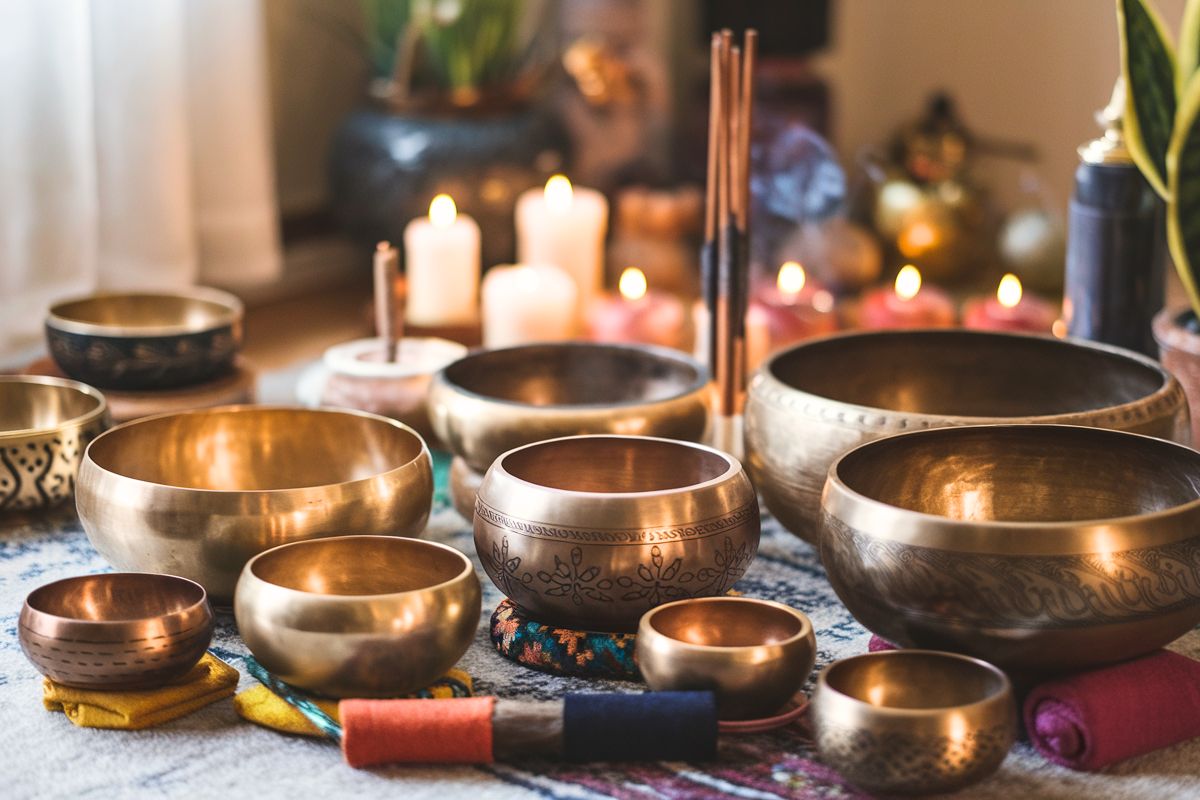
1. Tibetan Singing Bowls
Known for their deep, resonant tones with layered overtones, Tibetan bowls are crafted from a seven-metal alloy traditionally symbolizing the planets in the solar system (Inácio, 2006). These bowls are frequently used for grounding and are widely popular in meditation, chakra alignment, and energy balancing. Tibetan bowls produce deep, grounding tones effective for lower to middle chakras, including the Root, Sacral, Solar Plexus, and Heart, supporting stability, emotional balance, and relaxation (August et al., 2012).
2. Crystal Singing Bowls
Made from pure quartz crystal, crystal singing bowls emit high, clear tones that strongly resonate with the body’s higher chakras, particularly the Third Eye and Crown chakras (Ann & Bae, 2017). These bowls are commonly used in sound baths, deep meditation, and chakra alignment practices due to their penetrating resonance. Crystal bowls are believed to encourage spiritual insight, intuition, and awareness, making them highly effective for practices centered around higher consciousness and introspection.
3. Japanese Rin or Suzu Gong Bowls
Japanese Rin bowls, traditionally crafted from brass or bronze, produce a distinct bell-like ring with prolonged resonance. These bowls are integral to Japanese ceremonies and meditation practices, where they are used to support mindfulness and focus. Their high-pitched tones align well with the Throat and Third Eye chakras, enhancing mental clarity and aiding in clear communication and introspection (Schwarzinger, 2022).
4. Manipuri Singing Bowls
Manipuri bowls, crafted from mixed metals and often thinner than Tibetan bowls, produce mellow, lower-pitched tones. These bowls are recognized for their grounding qualities, resonating with the Root and Sacral chakras. Due to their calming vibrations, Manipuri bowls are widely used for relaxation, yoga, and meditative practices focused on cultivating inner stability and grounding energy (Landry, 2014).
5. Jambati Singing Bowls
Jambati bowls are large and often quite heavy, which allows them to produce low, rich tones with a long-lasting resonance (Wang et al., 2018). These bowls are commonly employed in deep meditation and grounding practices, aligning well with the Root, Sacral, and Solar Plexus chakras. The deep, grounding tones make Jambati bowls ideal for work with lower chakras, promoting emotional stability, resilience, and a strong foundation in one’s self.
6. Lingam Bowls
Lingam bowls are distinguished by a raised bump (lingam) in the center, symbolizing spiritual energy. These bowls produce a complex, layered sound that enhances spiritual energy, making them popular in spiritual rituals and meditation for inner exploration. Lingam bowls are primarily associated with the Heart and Crown chakras, where they encourage empathy, compassion, and a profound connection to the divine (Kloprogge et al., 2006).
7. Thadobati Bowls
Thadobati bowls, crafted with high, straight sides and a flat or slightly rounded bottom, produce clear, steady tones that are well-suited for higher chakras, specifically the Throat, Third Eye, and Crown chakras. The high-pitched tones of Thadobati bowls are known to support mental clarity and focus, making them a popular choice for meditation practices focused on insight and spiritual awareness (Pimentel et al., 2018).
The Role of Vibrations & Frequencies in Sound Healing
Each type of singing bowl produces unique vibrational frequencies that correspond to various healing effects. Studies show that these frequencies can help re-align the body’s natural rhythms, promote a meditative state, and encourage healing by shifting brainwave patterns into more relaxed states (Landry, 2014). Additionally, research indicates that different bowl sizes influence frequency ranges, with smaller bowls producing higher pitches suitable for higher chakras and larger bowls generating lower frequencies ideal for grounding and balancing lower chakras.
Practical Tips for Choosing & Using Singing Bowls

Selecting the right singing bowl can greatly enhance your sound healing or meditation practice. Here are some tips to help you choose and use singing bowls effectively;
1. Match the Bowl to Your Goal
- Grounding: For stability and grounding, choose a larger metal bowl, like a Jambati, which resonates with lower chakras such as the Root and Sacral.
- Spiritual Connection: For higher consciousness and intuition, select a crystal singing bowl. Its clear, high tones align well with the Third Eye and Crown chakras.
2. Consider Size & Material
- Metal Bowls (e.g., Tibetan) offer grounding tones that work across multiple chakras.
- Crystal Bowls have intense resonance, ideal for higher chakra work and sound baths.
3. Playing Techniques
- Strike: Lightly tap the bowl with a mallet for a quick, focused tone to sharpen concentration.
- Rim: Move the mallet around the rim for continuous sound, producing soothing vibrations ideal for relaxation.
4. Set an Intention
Before beginning, align the bowl’s sound with a purpose, such as grounding or mental clarity. Setting an intention helps deepen your connection to the bowl’s vibrations, guiding you toward your desired emotional or spiritual state.
Harness the Healing Power of Singing Bowls for Inner Peace
Whether you’re new to sound healing or an experienced practitioner, understanding the different types of singing bowls and their specific effects can enrich your healing journey. Each bowl brings a unique resonance that can help align chakras, deepen meditation, and support mental and emotional balance. By incorporating the right bowl into your practice, you can unlock new levels of inner peace and holistic wellness.



 English