
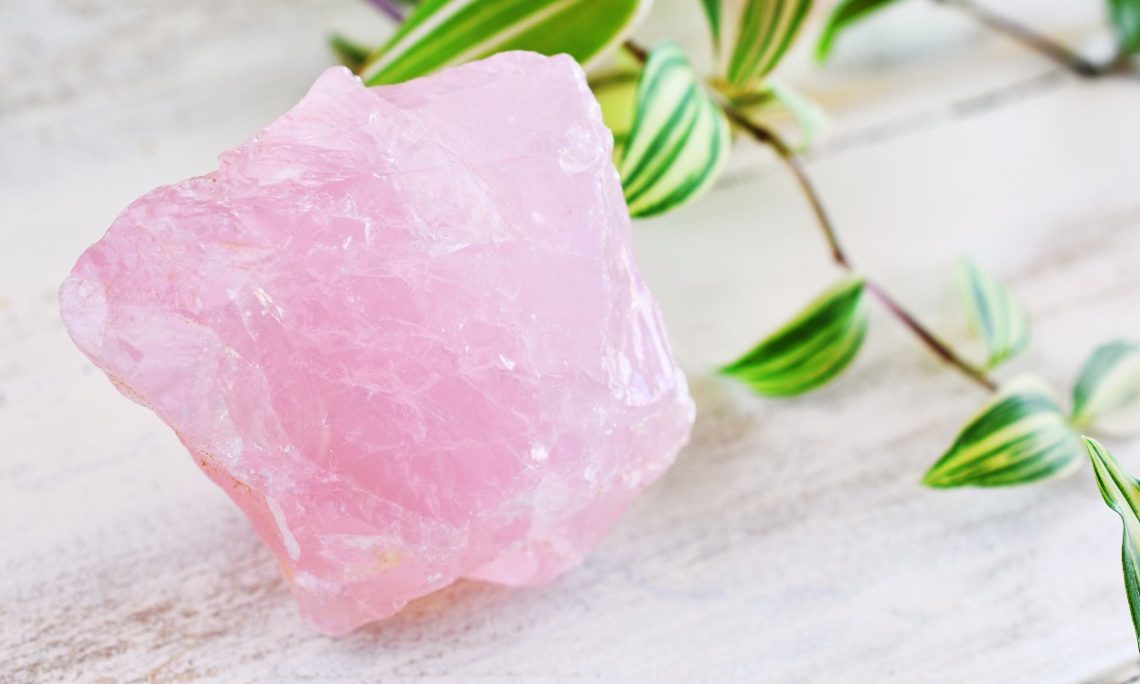
Embarking on our journey with rose quartz, we find it’s more than just a stone. Its soft pink hue, a testament to its unique composition, is a visual delight. Beyond its beauty, Rose Quartz is valued for its durability, spiritual symbolism, and intriguing interactions with water.
This article will delve into these facets, exploring the relationship between rose quartz and water, the practices of using this gemstone in crystal infused water, and the best ways to care for your rose quartz. So, let’s dive in and unravel the mysteries of rose quartz and its fascinating connection with water.
The Nature of Rose Quartz
Rose quartz, a charming member of the quartz family, is truly a sight to behold. Its unique rosy pink color, ranging from a soft, almost ethereal pink to a deep, passionate rose, is a testament to nature’s artistry. This enchanting hue is not just a random occurrence, but a result of trace amounts of titanium, iron, or manganese that have been intricately woven into the crystal’s structure.
But there’s more to rose quartz than meets the eye. Beneath its delicate beauty lies a strength that’s both admirable and surprising. On the Mohs Hardness Scale, a universally recognized system for measuring the hardness of minerals, rose quartz holds a firm position at 7. This indicates its impressive durability and resistance to scratches, suggesting that it can hold its own when exposed to water.
However, the relationship between rose quartz and water is not a straightforward one. It’s not solely determined by its hardness. It’s a nuanced interaction, influenced by various factors such as the type of water it comes into contact with and the duration of this exposure. A brief encounter with tap water might leave the rose quartz unaffected, while a long immersion in salt water could have different implications.
Can Rose Quartz Go in Water?
The simple answer to the question is yes, rose quartz can go in water. This beautiful gemstone, with its robust hardness and durability, is more than capable of withstanding short-term exposure to water without suffering any significant damage. But, as with many things in life, the answer isn’t quite as straightforward as it may seem. The type of water that rose quartz encounters can significantly influence how it interacts with it, adding an intriguing layer of complexity to this seemingly simple question.
Imagine, for instance, submerging your rose quartz in tap water or distilled water. This is a common practice among gemstone enthusiasts, and rose quartz, with its inherent toughness, handles it with grace. It emerges from the water just as radiant and intact as it was before its bath, ready to continue its role as a cherished gemstone in your collection.
But let’s change the scenario a bit. What happens when rose quartz meets salt water? Here, the story takes a bit of a twist. While rose quartz won’t dissolve or disintegrate in salt water – it’s far too resilient for that – prolonged exposure can lead to an unexpected consequence and the formation of salt deposits. Over time, these deposits can accumulate on the crystal’s surface, potentially dulling its luster and altering its natural beauty.
So, while the answer to “Can rose quartz go in water?” is a simple yes, the full story is a bit more nuanced. It’s a tale of resilience and adaptation, of maintaining beauty under varying conditions, and of the subtle yet significant influences that different types of water can have on this remarkable gemstone.
How long can rose quartz be in water?
Typically, rose quartz can comfortably be in water for brief periods, anywhere from a few minutes up to a few hours. This is often the case when the gemstone is being cleaned. It’s bathed in lukewarm water and gently scrubbed with a soft brush or cloth to maintain its radiant luster. After such a water-based cleaning session, it’s crucial to dry the rose quartz thoroughly to ward off any potential water-induced damage.

However, when it comes to extended periods of immersion, especially in salt water, caution is advised. Rose quartz, despite its resilience, may not fare well with long-term exposure to salt water. If left in salt water for an extended duration, such as several days or weeks, salt deposits may form on the crystal’s surface, potentially diminishing its natural shine over time.
The type of water also plays a role in determining the safe immersion time for rose quartz. Distilled or purified water, being free of chemicals or minerals, is generally a safer option for longer submersion compared to tap water.
While rose quartz is water-resistant, it’s advisable to limit its water exposure to short durations. If submersion is necessary, aim for a brief period, and always ensure the gemstone is thoroughly dried afterward. This approach ensures that the beauty and integrity of your rose quartz remain unscathed.
The Impact of Water on Rose Quartz
When rose quartz encounters water, the immediate effects are minimal. Whether it’s a few raindrops or a brief dip in a cleaning solution, the crystal remains largely unaffected in the short term. Its physical structure, characterized by its hardness and durability, can withstand such transient exposure to water. Similarly, its metaphysical properties, often associated with love and healing, remain intact.
However, the story changes when rose quartz faces prolonged exposure to water. Over time, the persistent presence of water can lead to potential issues, especially if the crystal isn’t properly dried afterward. This is because water can seep into microscopic cracks and fissures in the crystal’s structure that are naturally present or caused by wear and tear. If the water isn’t completely dried off, it can contribute to the gradual degradation of the crystal over time.
As for showering with rose quartz, while it’s technically possible, it’s generally not recommended. The environment in a shower includes hot water and steam, which can cause thermal stress to the crystal. Additionally, showers often involve soaps, shampoos, and other products that contain chemicals. These chemicals can potentially react with the rose quartz, leading to subtle changes in its physical appearance or structure over time.
Scientifically, rose quartz is composed of silicon dioxide. While this compound is generally stable and resistant to water, it can react with certain chemicals found in cleaning products. For instance, strong alkaline solutions can slowly react with silicon dioxide to form silicates. While this reaction is slow and requires prolonged exposure, it’s a potential risk when showering with rose quartz regularly.
A scientific study conduct in 1961 looked into how quartz, including rose quartz, behaves in water. They found that while rose quartz doesn’t easily dissolve in water due to its water-resistant nature, it can add a tiny amount of silica (the material it’s made of) to the water under certain conditions, like when it’s shaken or stirred continuously. However, the amount of silica that rose quartz adds to water at room temperature is very, very small – about 6 parts per million. This means that in a million tiny pieces of water, only about 6 of them would be silica from the rose quartz. Overall, its impact on the water’s composition is negligible.
Can I Use Rose Quartz in Crystal Infused Water and Crystal Water Bottles?
Yes, you can certainly use rose quartz in both crystal-infused water and crystal water bottles. This practice, often referred to as making gem-water or a crystal elixir, involves charging water with the energy of a crystal, in this case, rose quartz.
Rose quartz is a popular choice for this purpose due to its reputed properties of promoting love, tranquility, and emotional healing. Its durability and resistance to water make it safe for this use, as it won’t dissolve or release any harmful substances into the water.
To create rose quartz-infused water, you can place a clean rose quartz crystal in a glass of water and leave it for a few hours or overnight. Some people prefer to place the crystal outside under the moonlight to charge. After the charging period, the water is believed to be infused with the energy of the rose quartz.
If you’re using a crystal water bottle, these often come with a separate compartment for the crystal, allowing the water to be charged without the crystal physically touching it. Simply place a clean rose quartz crystal in the designated compartment of the bottle, fill the bottle with water, and let it sit for a few hours, or even overnight.
However, it’s important to remember that while rose quartz is generally safe for use in crystal-infused water and crystal water bottles, not all crystals are. Some can release toxic substances when in contact with water. Always ensure to research and confirm the safety of a crystal before using it in water.
Lastly, while many people enjoy and believe in the benefits of crystal-infused water, these benefits are not scientifically proven. Always prioritize safe and clean drinking water, and consider crystal-infused water as a complementary practice rather than a replacement for any medical treatment or advice.
Cleaning and Caring for Rose Quartz
Maintaining the beauty and integrity of your rose quartz involves regular cleaning and careful handling. Cleaning rose quartz with water is a common practice, and it’s an effective way to remove any physical impurities such as dirt or dust that may have settled on the crystal. However, this process requires a gentle touch and an awareness of the crystal’s sensitivity to temperature changes.
Extreme temperatures can be detrimental to your rose quartz. Cold water, for instance, can cause thermal shock, a sudden temperature change that can lead to fractures in the crystal. On the other hand, boiling water can reach the quartz’s melting point, potentially causing damage or altering its structure.
To safely clean your rose quartz, lukewarm water is your best bet. This temperature is gentle enough to avoid thermal shock but effective enough to cleanse the crystal. Using a soft cloth or brush, gently scrub the surface of the rose quartz, taking care not to scratch or damage it.
After cleaning, it’s crucial to thoroughly dry your rose quartz. Any residual water can seep into tiny cracks or fissures in the crystal, potentially leading to damage over time. Use a soft, dry cloth to carefully wipe down the crystal, ensuring it’s completely dry before storing it.
By following these guidelines, you can keep your rose quartz clean and vibrant, preserving its beauty and energy for years to come.
FAQs
Can rose quartz go in the sun?
While rose quartz can withstand sunlight, prolonged exposure can lead to color fading. It’s best to keep your rose quartz out of direct sunlight for extended periods.
Can you wash quartz with water?
Yes, quartz can be washed with water. However, as with rose quartz, avoid extreme temperatures and ensure the crystal is thoroughly dried afterward.
Can rose quartz go in the shower?
While it’s possible to take rose quartz into the shower, it’s not recommended due to potential exposure to hot water, steam, and chemicals from soaps or shampoos.
Does rose quartz purify water?
While some believe that rose quartz can energetically purify water, there’s no scientific evidence to support this claim. It’s always important to ensure water is physically clean and safe to drink.



 English